


Business Disaster Preparedness 101: Crisis and Disaster Planning
Updated: Oct 23, 2025

Imagine a sudden power outage that takes down your network, halts orders, and silences communication with your customers. How long could your business operate before losses pile up? That’s where business preparedness comes in.
When a regional storm knocks out the power for three days, businesses with a preparedness plan can begin taking action using their continuity plan to move production to a partner facilities and continue to meet all deadlines in timely manner proving that planning pays off.
This is one solution of many that your business can consider.
What is a Business Continuity Plan?
A Business Continuity Plan (BCP) is a proactive and detailed guide that outlines how a business will continue its essential operations during and after unexpected disruptions, such as natural disasters, cyberattacks, power outages, or other emergencies. It includes strategies to protect employees, maintain critical processes, and minimize downtime, giving you a sense of preparedness and control.
Why is a Business Continuity Plan Essential?
Minimizes Downtime: Ensures your business can keep running or quickly bounce back after disruptions.
Protects Revenue: A BCP reduces financial losses by maintaining operations and serving customers, providing financial security and confidence in your business's resilience. Safeguards Reputation: Demonstrates reliability to customers, partners, and stakeholders by being prepared for the unexpected.
Supports Employees: Provides clear instructions, reducing panic and confusion during emergencies.
Meets Compliance Standards: A BCP ensures your business meets industry standards and regulations, providing reassurance and a sense of compliance. In short, a BCP is a safety net that helps your business survive and thrive through challenges, ensuring long-term success.
Disaster Recovery Strategy Guide vs. Disaster Recovery Plan
Disaster Recovery Strategy Guide
A Disaster Recovery Strategy Guide is a high-level resource that outlines the approach and methods a business should take to prepare for and recover from disruptions. It focuses on the "what" and "why" behind disaster recovery efforts, helping businesses:
Assess potential risks and their impact.
Identify key recovery goals, such as restoring critical systems or minimizing downtime.
Evaluate available tools, resources, and recovery options (e.g., cloud backups, alternative sites).
Choose the best strategies based on cost, effectiveness, and alignment with business objectives.
This guide is more about the planning framework and strategic considerations than execution. It's like setting the direction before creating a roadmap.
Disaster Recovery Plan
A Disaster Recovery Plan (DRP) is a detailed, actionable document that spells out the "how" and "when" of recovering from a disaster. It includes:
Step-by-step instructions to restore critical systems, data, and operations.
Assigned roles and responsibilities for team members.
Specific timelines and priorities for recovery actions.
Backup procedures, communication protocols, and resource checklists.
The DRP is designed for use during a disaster and serves as the execution manual for implementing the strategies outlined in the guide.
Getting Started with Your Business Continuity Plan
Identify your critical operations and backup processes.
Assign team roles and responsibilities.
Test your plan regularly.
Review and update it after every incident.
Is your businss ready for anything?
Take Action: Build a Resilient Business
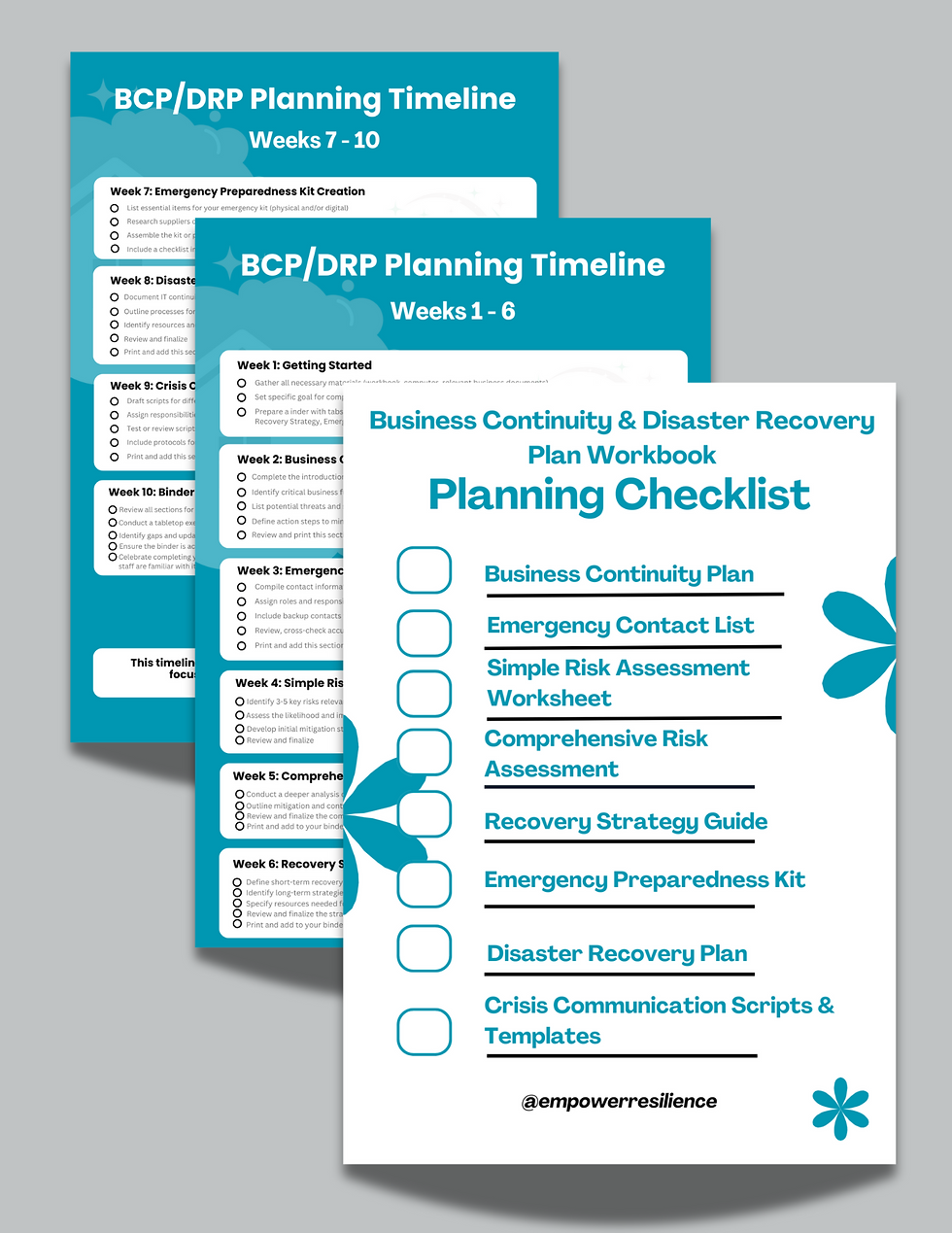
Don’t wait for a disruption to reveal your weak spots. Get the Business Continuity and Disaster Recovery Workbook—your step-by-step guide to keeping your business running no matter what happens.




Comments