


Crisis Planning for Professional Services: Business Continuity and Disaster Recovery Made Simple

Running a professional service business takes skill and determination. Whether you lead a law firm, a marketing agency, or an accounting practice, your clients count on you for expertise, reliability, and trust. But what happens when something beyond your control disrupts operations? A cyberattack, power outage, or natural disaster can bring your business to a standstill - sometimes for hours, sometimes for months.
Crises feel overwhelming, but preparation doesn't have to. Resilience grows over time - through mistakes, lessons learned, and the determination to rise to new challenges. Small actions today can create a big difference tomorrow. You already know your business best: which operations are essential, which client services matter most, and how your team works together. A continuity plan puts that knowledge into writing so your team has a clear roadmap when the unexpected happens.
Understanding Potential Crises

Unexpected crises are happening more often, and they affect businesses in very real ways:
Economic downturns shrink client budgets and make long-term contracts harder to secure.
Natural disasters can make offices inaccessible or limit client travel.
Cybersecurity breaches put client trust and sensitive data at risk.
Health crises shift how (and where) your staff and clients can interact.
These potential crises are common occurrences that every business could face. What sets resilient companies apart is the choice to prepare, even if it happens one page at a time.
Building a Crisis Management Plan

Think of a crisis management plan as a gift to yourself and your team. It's not about creating a perfect binder overnight - it is about documenting the things you already know in a way that others can follow when you're not around to explain.
Risk Assessment: Start by asking, "What would hurt us the most if it stopped working?"
Communication Strategy: Clients want honesty during tough times. Drafting a few "just in case" emails or messages ahead of time can save you stress later.
Emergency Response Procedures: Write down who to call, where backups are stored, and what steps to take in the first hour of a crisis.
Recovery Plan: Document how your team will get business operations back on track. Writing out a clear path or general outline can help improve your business's ability to recover from a crisis.
Little by little, these notes turn into a playbook your whole team can use.
Establishing a Strong Support System
You don't need to wait until you've saved thousands to bring in an outside consultant before you can start building resilience. The truth is, your most incredible resource is already within reach - your team and the relationships you've built in your community. With a little structure, you can begin shaping a strong continuity plan today.
Staff Training: Even the most dedicated employees can't read your mind. Giving them clear instructions and defined roles ensures they can step up and support the business when it matters most.
Networking with Peers: Other professionals are navigating the same risks you are. Sharing resources, lessons learned, or even simple tips can lighten the load and spark solutions you may not have thought of alone.
Partnership with Local Authorities: Having a direct contact at your city's emergency office can give you peace of mind as it creates a line of support when your business and community need it most.
By connecting the dots between your people, your peers, and your local resources, you're not just building a stronger business - you're helping to weave a resilient network that benefits everyone.
Financial Preparedness

Money may not buy happiness, but it sure helps in a crisis. Setting aside even a small emergency fund gives you breathing room when things get tough.
Emergency Fund: Start small. Even saving a little each month builds a cushion.
Diversification of Services: If one service slows down, another can keep revenue flowing.
Flexible Pricing Strategies: Offering temporary options for clients can help them stick with you instead of pausing services.
Prepared finances = fewer sleepless nights.
Leveraging Technology for Crisis Preparedness

Technology can feel intimidating, but it's also one of your best allies.
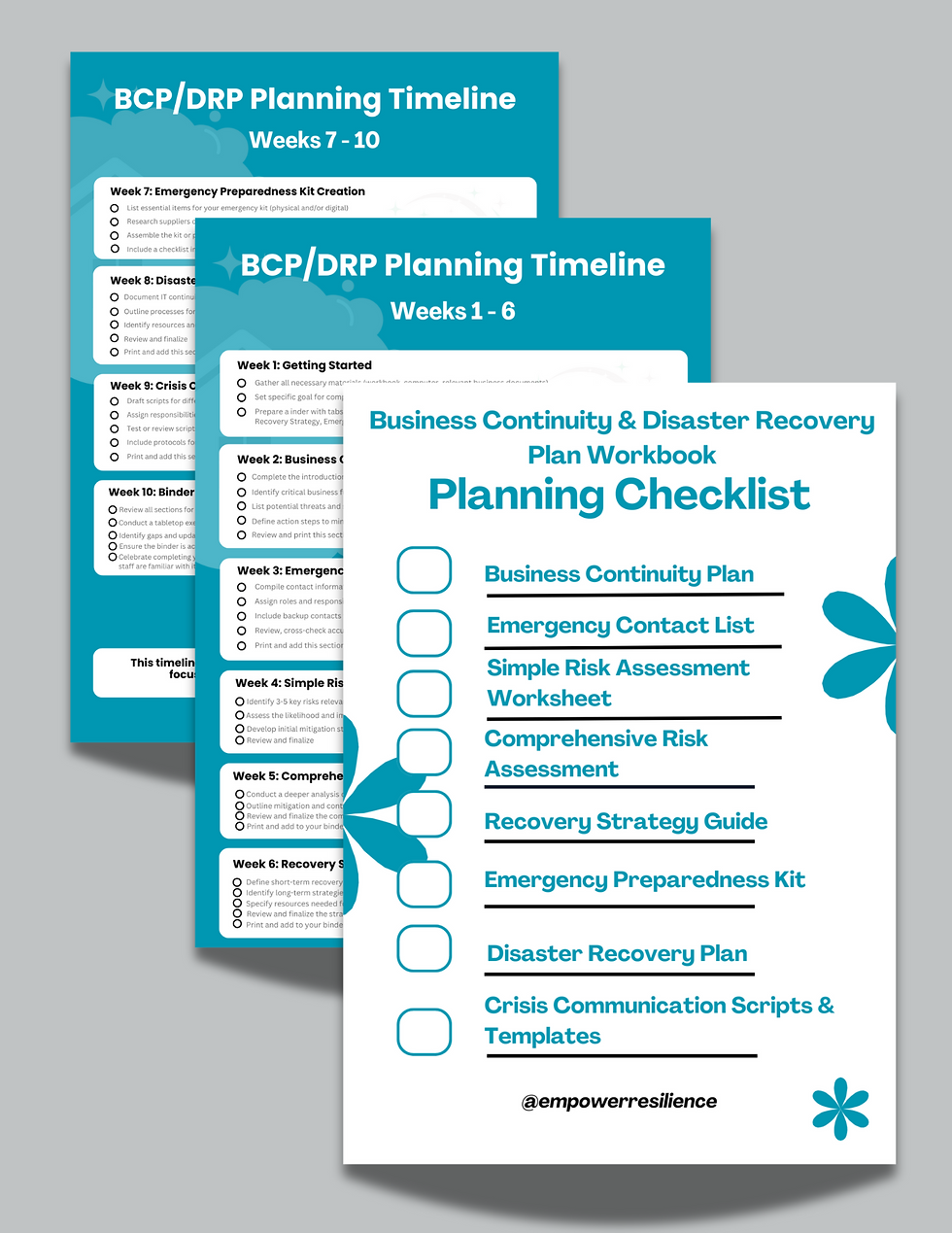
Business Continuity and Disaster Recovery Workbook (a 180+ page digital PDF):
Designed by an emergency management professional with small-and medium-sized businesses (e-commerce, brick-and-mortar, and hospitality) in mind. This digital workbook can be edited on your computer, saved electronically, and printed for easy accessibility in emergencies.
Cloud Solutions: Think of them as a digital safety deposit box - accessible anywhere, anytime.
Cybersecurity Measures: Investing in security today keeps you from paying a much bigger bill tomorrow.
Communication Tools: Tools like group messaging apps or video conferencing make staying connected simple, even when the office is closed.
You don't need to overhaul everything at once; begin by choosing one improvement and build from there.
Fostering Client Relationships

At the heart of every professional service business are relationships. Crises test the bonds of these relationships and create opportunities to show clients what your business is capable of.
Regular Updates: Silence makes people anxious; updates, even short ones, create trust.
Personalized Service: A little flexibility shows you care about their challenges and demonstrates your loyalty to your clients.
Building Trust: Reliability during tough times often turns clients into lifelong partners.
When clients know you've got their back, even when things go wrong, they may return the loyalty tenfold.
Continuous Review and Improvement
Your business continuity plan and disaster recovery plan should evolve with your business as it changes to its systems, personnel, procedures, and service delivery.
Scheduled Reviews: Pick a date on the calendar each year to update your plan.
Gathering Feedback: Ask your team, "What worked? What didn't?" after a disruption.
Learning from Past Events: Every challenge is a chance to improve.
Improvement is a process, not a finish line.
Take Action
Unexpected crises will always come, but your response doesn't have to be uncertain. With a thoughtful plan, built step by step, you protect your team, your clients, and your reputation.
The Business Continuity and Disaster Recovery Workbook is a tool designed to help small- and medium-sized businesses (brick-and-mortar, e-commerce, and hospitality) create their business continuity and disaster recovery plan. It walks the planner through risk assessments, communication templates, and recovery strategies. The structure of the templates guides planners through the different aspects of their business to input their business-related information, job aids, and reports.
Your business deserves the chance to thrive no matter what comes its way. Don't wait until the next disruption - start your plan today, one page at a time.
Get your copy of the Business Continuity and Disaster Recovery Workbook and begin building resilience for tomorrow.




Comments