


Top 7 Mistakes Businesses Should Avoid When Creating a Disaster Recovery Plan
- Cecilia Veloz
- Feb 19, 2025
- 2 min read
Updated: Jul 13, 2025

A well-structured disaster recovery plan (DRP) can mean the difference between business survival and failure after a crisis. Here are the top seven mistakes businesses should avoid when developing their DRP:
Failing to Conduct a Risk Assessment
Many businesses jump into planning without first identifying their risks. Your plan may be ineffective or incomplete without understanding potential threats—such as cyberattacks, natural disasters, or power outages.
Not Prioritizing Critical Business Functions
Businesses often create generic recovery plans without focusing on essential operations. Identifying mission-critical processes and systems ensures that resources are allocated effectively to minimize downtime.
Overlooking Data Backup and Redundancy
Inadequate data backup is a common pitfall. Businesses should implement automatic, offsite, and cloud-based backups to protect against data loss due to system failures, cyberattacks, or natural disasters.
Lack of Employee Training and Awareness
A disaster recovery plan is only as strong as the people executing it. Even the best plan will fail if employees are unaware of their roles. Regular training and drills help ensure a swift and coordinated response.
Ignoring Communication and Coordination
Clear communication is crucial during a crisis. Without a structured communication plan—including backup contact methods—employees, customers, and stakeholders may be left in the dark, leading to chaos and confusion.
Not Testing and Updating the Plan Regularly
A DRP should be tested through simulations and tabletop exercises to identify weaknesses. Failing to update the plan as technology, business operations, and threats evolve can render it obsolete.
Underestimating Downtime and Recovery Costs
Some businesses assume they can resume operations quickly without assessing the financial impact of downtime. A realistic estimate of recovery time and associated costs helps companies to allocate sufficient resources and insurance coverage.
By avoiding these mistakes, businesses can strengthen their resilience and increase their chances of surviving disruptions.
Start a comprehensive plan today to ensure your business is ready for the unexpected!
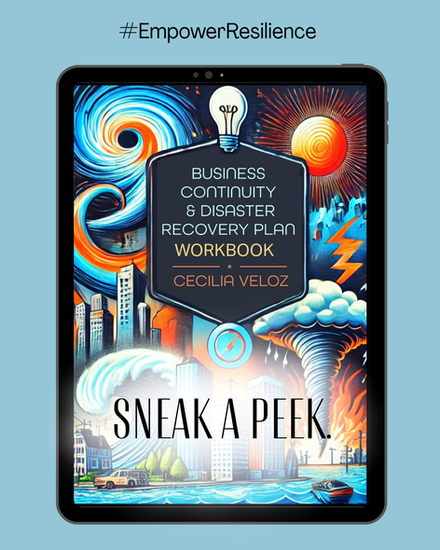
Purchase and download this Business Continuity and Disaster Recovery Plan Workbook
Fill in the pages with your plan
Save it to a cloud for your business
Print a copy and store it in a fireproof and water resistant case for safekeeping and easy accessibility.












Comments