


Hurricanes and Small Businesses: How to Prepare Your Business for Hurricane Season
Every year, hurricane season brings more than just strong winds and heavy rain. For small businesses, it brings uncertainty. According to FEMA, nearly 40% of small businesses never reopen after a disaster, and another 25% fail within a year (FEMA, 2020). Whether you operate a brick-and-mortar storefront, an e-commerce brand, or a small hospitality business, the stakes are high because disruptions don't just affect your bottom line; they affect your employees, your customers, and your community.
The truth is: you can't stop a hurricane, but you can prepare for one. The difference between shutting your doors indefinitely and reopening quickly often comes down to one thing - a strong continuity and disaster recovery plan.

Why Hurricanes Threaten Small Business Continuity

Hurricanes cause a ripple effect of challenges across industries. Here are just a few examples:
Brick-and-Mortar Businesses: Power outages, flooding, and physical damage can force closures for days or even weeks. Imagine a retail shop unable to open during the busiest shopping week of the month, with 60% of your inventory damaged by water.
E-Commerce Businesses: Even without a physical storefront, online retailers aren't immune. Shipping delays, supply chain breakdowns, and warehouse damage can prevent customer orders from being fulfilled. Lost trust can be harder to recover than lost sales.
Hospitality Businesses: Hotels, restaurants, and vacation rentals face unique pressures during a storm. Guests may need shelter, employees may evacuate, and closures can lead to significant reputational and financial losses.
When a hurricane disrupts your operations, your customers don't just want reassurance - they expect you to deliver on your promises. Without a plan, meeting those expectations becomes nearly impossible.
Common Preparedness Gaps That Put Small Businesses at Risk

Many business owners know they need to prepare; however, most struggle with executing planning efforts for potential business disruptions. Unfortunately, business continuity plans and disaster recovery plans are often neglected, leaving the business without a plan when disaster strikes.
Here are common pain points that leave businesses vulnerable:
Identifying which operations are "mission-critical."
Protecting inventory, technology, and equipment from storm damage.
Managing supply chain interruptions and delayed shipments.
Maintaining reliable communication with customers and employees.
Planning for backup power and internet connectivity.
Documenting insurance, contracts, and vendor agreements.
Training staff on their roles before, during, and after a storm.
Mapping out financial recovery strategies for temporary closures.
If these sound familiar, you're not alone. Addressing these tasks is crucial; adequate preparation can mean the difference between resilience and collapse.
How to Create a Business Continuity and Disaster Recovery Plan for Hurricanes
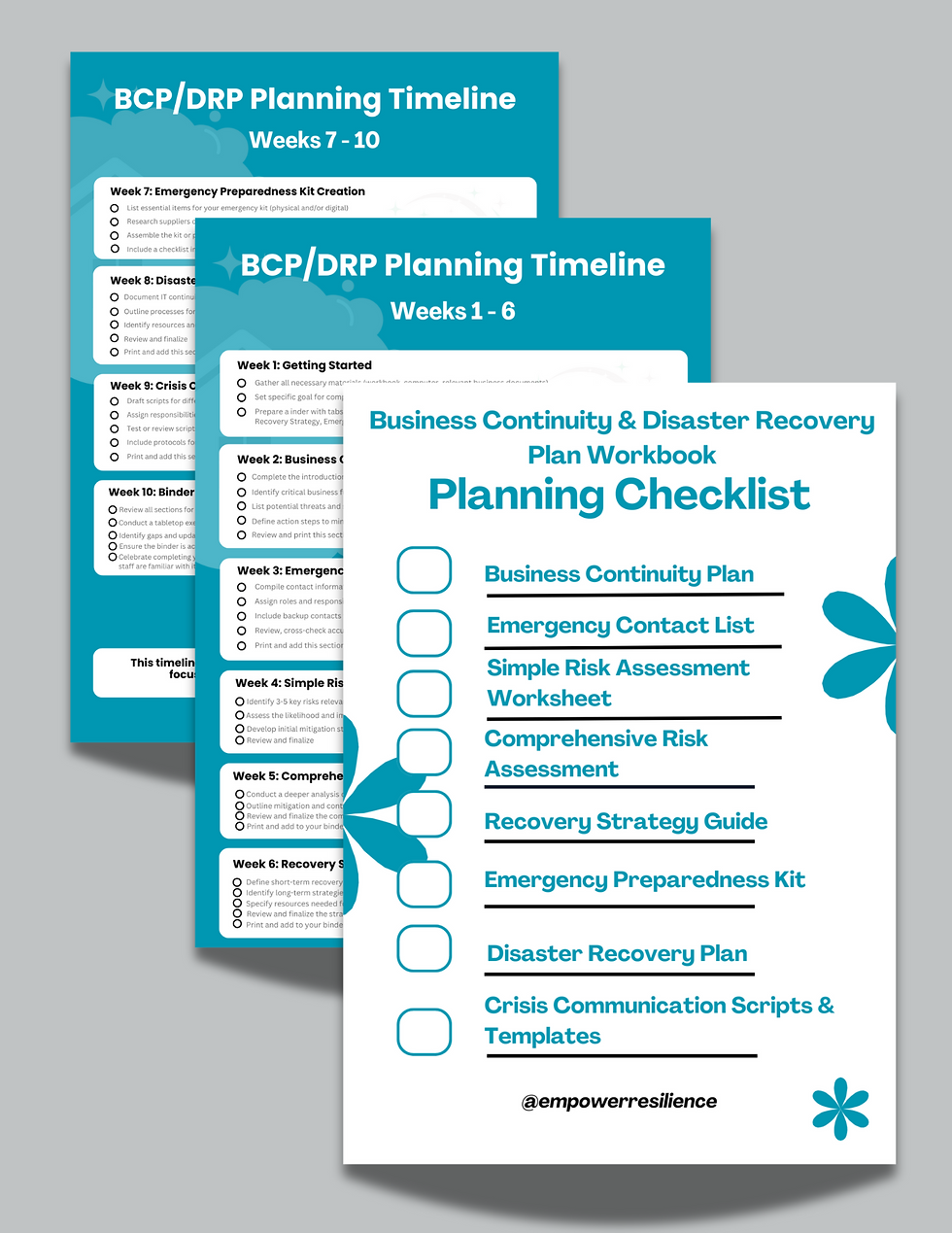
Preparedness doesn't need to be overwhelming. It's about breaking the process into manageable steps. That's where the Business Continuity and Disaster Recovery (BCDR) Workbook comes in.
Here's how it helps different types of businesses:
Risk Assessment Worksheets: Identify your biggest threats - whether it's storm surge flooding for a storefront, warehouse damage for an e-commerce shop, or guest safety for a hospitality business.
Business Continuity Plan Templates: Lay out how you'll keep operating if power is out, staff can't report, or shipment delays.
Disaster Recovery Plan: Map the steps to restore systems, reopen your business, and process insurance claims after the storm passes.
Communication Templates: Pre-written messages help you keep customers, employees, and stakeholders informed while building trust instead of panic.
Recovery Strategy Guide: Actionable checklists ensure you reopen faster, minimize downtime, and position your business as dependable even in the face of disaster.
Hurricane Preparedness Scenarios Every Business Owner Should Consider

Ask yourself:
If the hurricane hit tonight, how long could your business continue operating without power or internet?
Would you know how to communicate with customers if phone and email services were down?
If your supply chain were disrupted for two weeks, do you have alternatives in place?
What would it cost your business to close for seven days?
Do you have a plan to absorb or offset that loss?
If your answers are uncertain, now is the time to prepare.
Take Action Now: Protect Your Business Before the Next Hurricane
Hurricanes don't wait and your preparedness plan can't either. Preparing for hurricane season doesn't just protect your business operations for the next storm, a comprehensive plan can include planning for other types of hazards relevant to your business. Preparedness planning protects your employees, your reputation, and your future.
The Business Continuity and Disaster Recovery Workbook was designed to make this process simple, giving you the tools to assess risks, build plans, and strengthen your resilience.
Don't wait until the forecast turns ominous. Start today so that when the winds rise, your business stands strong.
Get your copy of the Business Continuity and Disaster Recovery Workbook and take the first step toward protecting your business, your team, and your customers.
References
Federal Emergency Management Agency (FEMA). (2020). Disaster recovery: Preparing small businesses for disaster. Retrieved from https://www.fema.gov
National Oceanic and Atmospheric Administration (NOAA). (2022). Hurricane preparedness and impacts on communities. Retrieved from https://www.noaa.gov
Small Business Administration (SBA). (2021). Disaster preparedness for small businesses. Retrieved from https://www.sba.gov




Comments