


Disaster-Proof Your Pet Boarding Business: How to Prepare for the Unexpected
Updated: Aug 19, 2025
Disaster-Proof Your Pet Boarding Business: How to Prepare for the Unexpected
Imagine this: You have a whole house of furry guests, the phones are ringing off the hook, and then - BOOM! The power goes out! Your facility is left without vital resources like lights, an active security system, and climate control for the kennels. Panic sets in for you, your staff, your guests, and their parents, who trust you with their beloved companions.

Unexpected events, such as storms, equipment breakdowns, staffing shortages, or sudden supply disruptions, can occur at any time. For pet boarding businesses, these scenarios don't just mean lost revenue - they can affect animal safety, client trust, and your professional reputation.
The good news? Preparation is your strongest safeguard.
This blog will help you identify common risks, understand why a disaster recovery plan is critical, and show how the Business Continuity & Disaster Recovery (BCDR) Plan Workbook can guide you through building a solid plan that keeps tails wagging—even when disaster strikes.
Why Pet Boarding Businesses Must Prepare for the Unexpected
Your business handles more than just pet stays at your facility - you care for living, breathing pets that require food, clean water, safe shelter, and medical care. It is the quality of your service, your impressive reputation, and the trust of your clients that keep you in business. Your ability to maintain operations is vital to your business's future success. As you already know, an operational disruption isn't just inconvenient - it can quickly become a crisis.

Consider these realistic scenarios, which may impact your business operations:
Severe Storm Damage: Strong winds cause roof damage to your facility, heavy rain causes roof leaks and flooding, forcing the immediate evacuation of all boarded pets.
Power Outage: Without backup power, the temperature control fails in the kennel area during extreme summer heat or severely cold winter temperatures, risking pet health.
Supply Chain Delay: Your primary pet food supplier misses a delivery, leaving you scrambling to feed animals on-site.
Staff Shortages: A flu outbreak sidelines multiple employees, leaving you unable to manage feeding, cleaning, and walking responsibilities for each guest.
Tech Failure: Your booking and customer database crash, leaving you without access to pet medical histories or emergency contacts.
These situations are common and most often occur without warning, leaving businesses in crisis. The truth is, these situations don't have to derail your business if you have a proactive plan in place.
Emergency Preparedness Pain Points Every Pet Boarding Facility Should Solve

Loss of climate control (heating/cooling) during outages
Food, water, and medication supply chain disruptions
Emergency pet evacuation procedures
Power or generator backup availability
Clear communication with staff and pet owners during crises
Safe relocation for animals if the facility becomes uninhabitable
Maintaining client trust during prolonged disruptions
Accessing critical pet medical records when systems go down
How the Business Continuity & Disaster Recovery Workbook Helps
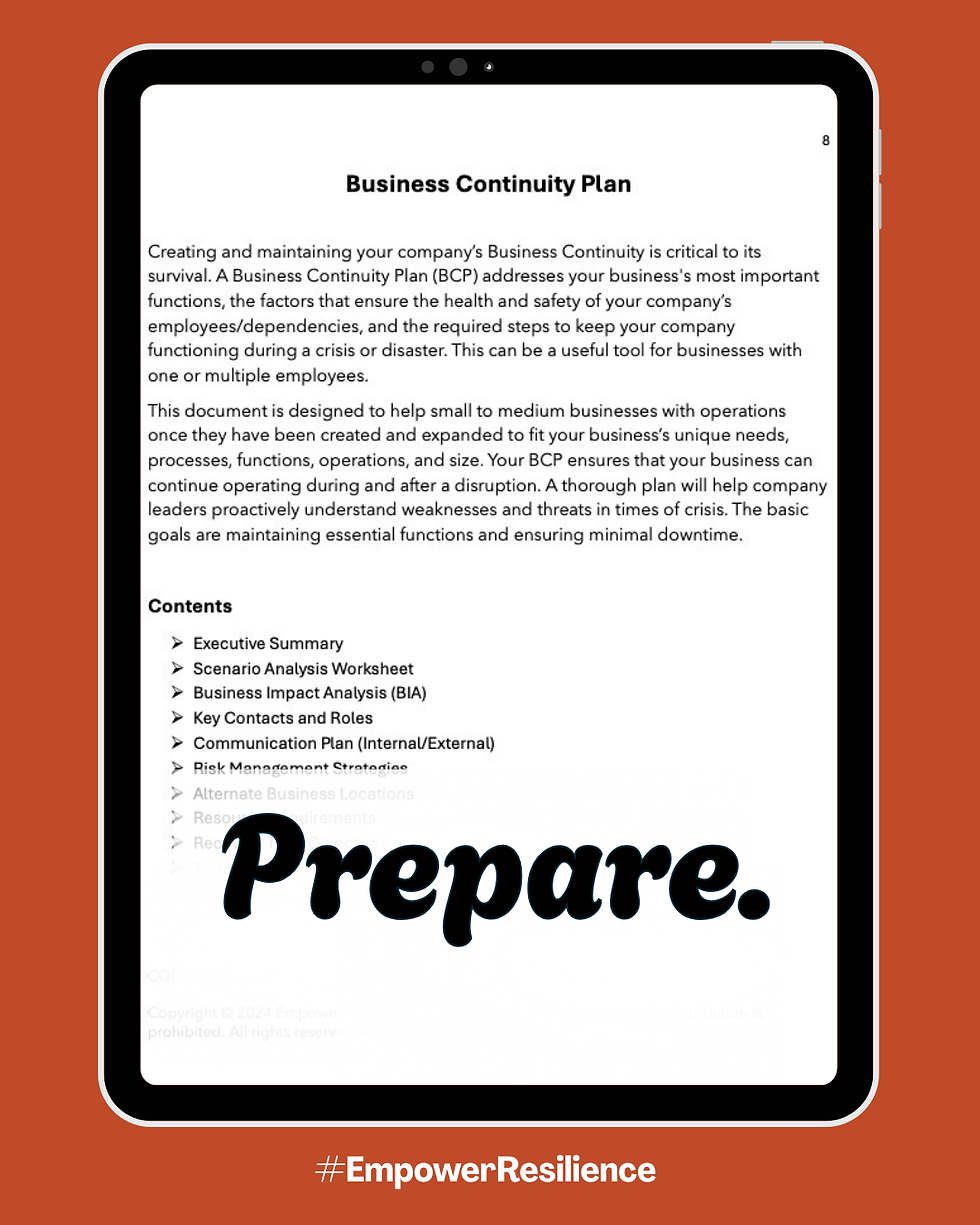
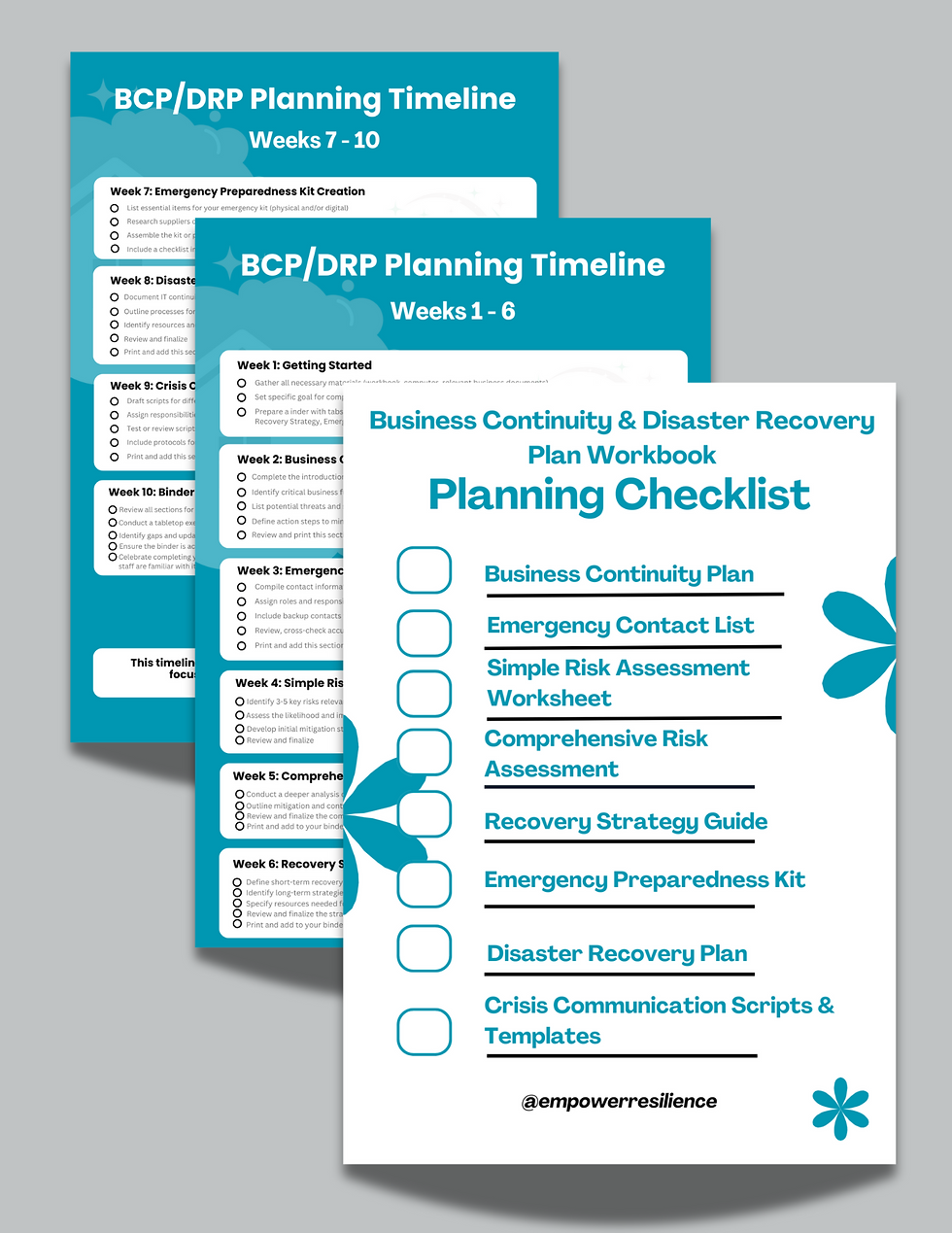
The BCDR Workbook is a comprehensive guide designed to help you assess risks, create mitigation strategies, and build a response plan for "what-if" scenarios that may impact your precious business.
Key sections from the BCDR Workbook that may apply to your pet boarding business:

1. Risk Assessment & Mitigation
Identify and prioritize threats such as natural disasters, power outages, and supply chain issues. The workbook provides worksheets to help your team identify vulnerabilities, such as facility layout, climate control systems, and vendor dependencies. After identifying threats, you can prioritize your planning efforts to strengthen each area of your business.

2. Emergency Contact & Resource Lists
It is crucial to document vital information that all team members have easy access to during times of crisis. Vital contacts to keep in mind may include, but are not limited to, emergency vets (including business hours), utility companies, backup boarding partners, local staffing services, emergency transportation services, and suppliers. During a crisis, quick access to these contacts can save time and lives.

3. Communication Plan Templates
The workbook includes ready-to-use communication scripts for notifying staff, clients, and investors about closures, safety measures, and recovery updates. Having easily accessible and readily available communication scripts empowers your team to act quickly and efficiently. Your business can effectively communicate with the target audience promptly, ultimately fostering client confidence and minimizing confusion.
4. Evacuation & Shelter Plans
A member or members of your team should create step-by-step guides to be included in your planning efforts, helping you plan a safe relocation for pets in case your facility becomes unsafe. Your plan should consist of transportation logistics and temporary shelter partners that enable you to keep your guests safe.
A clear plan may include:
a list of material items needed and location (digital and hard copy)
actions to take from the moment of alert through evacuation
operational plans and guides (digital and hard copy)
a preparedness kit
pre-existing agreements with vendors
This level of planning can create smooth operations during a time of crisis.
5. Recovery Strategy

A recovery plan is essential to create and update on a routine basis. Staff should be aware of where to find the plan and of the structured approach to resume business operations when it is safe to reopen after a business disruption.
Information to include in a Recovery Plan:
insurance claim submission/process and contacts
cleaning plan (staffing plan and backup vendors)
inventory restocking
instructions to re-establish normal business functions
communication plan for unique audiences
Why This Matters
When you're caring for pet guests, disaster readiness isn't optional. With proper planning, you can minimize downtime, prevent financial losses, and maintain client trust through transparency and preparedness.
Your Next Step: Plan Today, Protect Tomorrow
Don't wait for the storm to hit before you start planning.
The Business Continuity & Disaster Recovery Workbook gives you the tools, templates, and guidance to create a plan tailored to your pet boarding business.
Download your copy now and start building resilience today.
Preview what the Business Continuity & Disaster Recovery Plan has to offer your business!
References
Federal Emergency Management Agency. (2023). Ready Business: Disaster planning for organizations.https://www.ready.gov/business
Insurance Information Institute. (2022). Business insurance and disaster preparedness. https://www.iii.org
American Veterinary Medical Association. (2023). Emergency planning for animal facilities. https://www.avma.org
U.S. Small Business Administration. (2022). Disaster recovery and continuity planning. https://www.sba.gov




Comments