


Medical Office Disaster Preparedness: How to Protect Operations with Business Continuity and Disaster Recovery Planning
Updated: Aug 19, 2025
Medical Office Emergency Preparedness: Essential Steps to Protect Patients & Staff

Running a medical office is about more than patient care - it's about ensuring your practice can operate smoothly no matter what challenges come your way. Whether you're a family physician, dental office, physical therapy clinic, or specialist practice, unexpected events can halt operations, disrupt patient services, and strain your team. The reality is: preparedness isn't optional - it's essential for resilience and patient trust.
Ask yourself 5 simple questions:
Are you prepared?
What are you prepared for?
What are your businesses vulnerabilities at this moment?
Does your staff know where to find all vital information?
Are any of your staff members absolutely vital to your business operations - without them the train runs off the tracks?
Is anything documented to guide your staff through work arounds during times of system failures or crisis events?
Why Medical Offices Are Especially Vulnerable
Medical offices face unique challenges during emergencies. Unlike other businesses, patient care doesn't just "pause" when something goes wrong. Appointments are often urgent, medical records are sensitive, and equipment is specialized (and expensive). Even a short disruption can mean lost revenue, delayed care, and frustrated patients.

Let's look at some realistic scenarios that could impact your operations:
Power Outage During Peak Hours
Without power, you lose access to patient records, diagnostic equipment, and electronic payment systems.
Patients may need to be rescheduled, vaccines and medications may require refrigeration and be at risk to spoil within hours.
Cybersecurity Breach of Patient Data
A data breach could lead to HIPAA violations, legal action, and loss of patient trust. Even if systems are restoredquickly, the reputational damage can last years.
Natural Disaster Impacting Your Building
Floods, wildfires, or hurricanes can make your facility unsafe, leaving you scrambling to find temporary office space while still
providing care.
Staffing Crisis During a Health Emergency
A sudden outbreak among your staff could leave you unable to meet patient demand, especially if you rely on a small team.
Supply Chain Disruptions for Medical Essentials
Delays in receiving PPE, surgical gloves, or even paper products can impact your ability to maintain safe operations.
Why Preparedness is the Best Prescription for Resilience
By creating a comprehensive disaster recovery plan, you can ensure your medical office is ready to respond to and recover from any event. Planning ahead keeps patients safe, protects your revenue, and strengthens your reputation as a reliable provider.

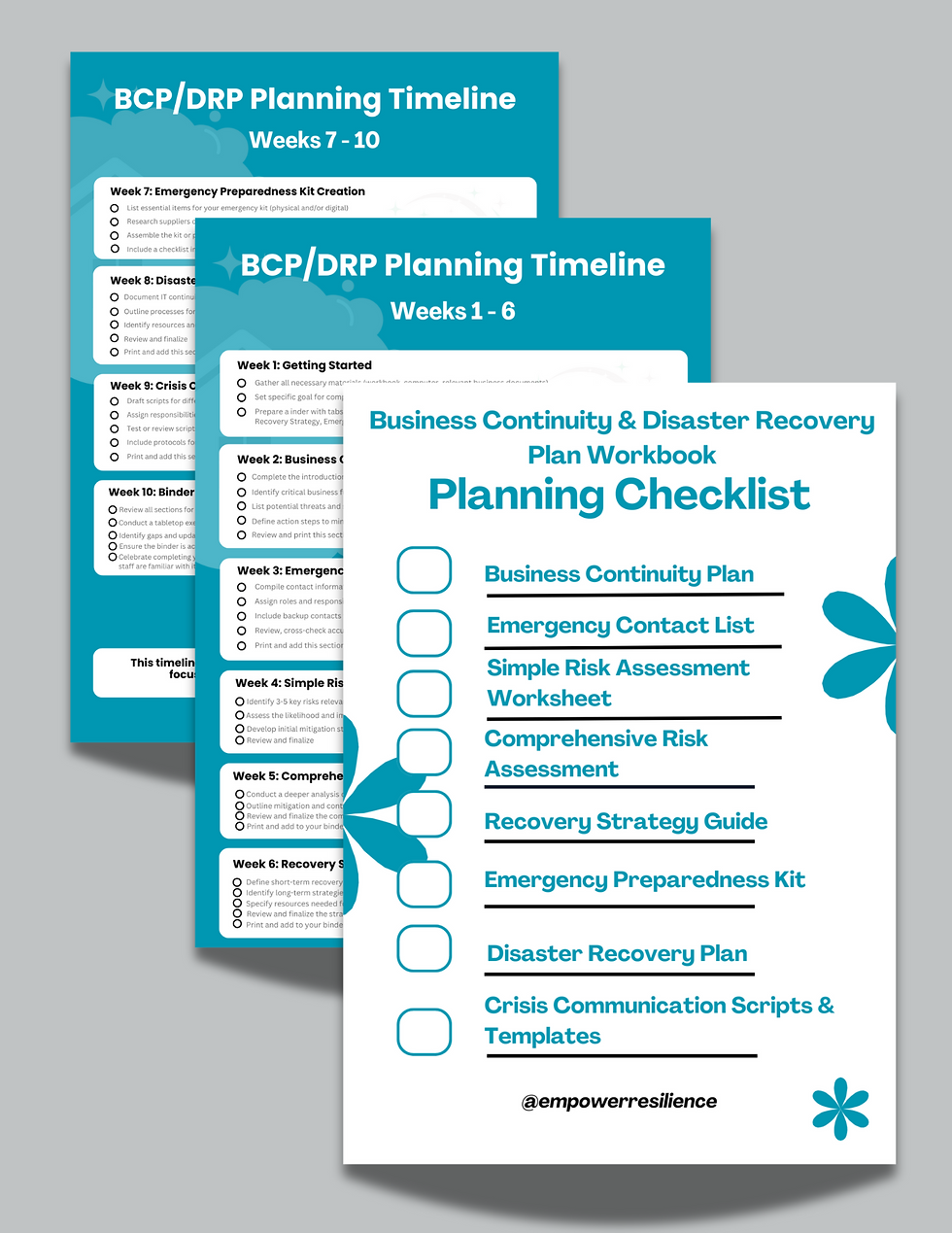
The Business Continuity and Disaster Recovery Workbook was designed to help small and medium businesses, including medical practices, create actionable plans tailored to their operations.
Here's how its elements apply to your practice:
Risk Assessment Worksheets
Identify threats; severe weather, utility failures, cyberattacks, and assess how each could impact patient care.
Emergency Communication Templates
Ensure patients and staff receive timely updates through email, text, or phone trees—minimizing confusion and cancellations.
Recovery Strategy Guides
Outline steps to restore operations, whether that's relocating temporarily, switching to telehealth, or implementing backup systems.
Critical Contact Lists
Keep quick access to emergency services, utility companies, vendors, and backup suppliers.
Crisis Communication Scripts
Provide staff with pre-written messages for patients, the media, or other stakeholders during emergencies.
Challenges That Impact Medical Office Preparedness and Continuity

If you own or manage a medical office, your disaster planning should focus on these often-overlooked areas:
HIPAA-compliant data backup and recovery
Alternative patient care delivery methods (e.g., telehealth during closures)
Vaccine and medication cold chain protection
Vendor redundancy for critical supplies
Clear patient notification systems
Employee safety protocols for infectious diseases
Insurance coverage for equipment, liability, and business interruption
Training staff for evacuation and shelter-in-place procedures
Assigning roles for decision-making during crises
Recovery timelines to prevent extended closures
Your Next Step: Plan Now, Protect Tomorrow
Emergencies don't wait for a convenient time. A flood, data breach, or staffing shortage could hit tomorrow. The good news? You can prepare now.

The Business Continuity and Disaster Recovery Workbook by Cecilia Veloz, walks you through creating a comprehensive plan for your medical office. The templates include are designed to help business owners plan and organize their systems, processes, procedures, etc. Many elements should be included in a comprehensive plan, but only your staff has the information that can help you immediately get started.
The Business Continuity and Disaster Recovery Plan Workbook covers everything from risk assessments to communication templates. After securing your purchase and PDF download, you and your team can move throught the clear, step-by-step guidance you will need in your planning endeavors.
Ensure you and your staff will be ready to keep your patients safe and your operations steady, no matter what comes your way.
Take Action Now: Protect Your Business
Download Your Free Medical Office Emergency Readiness Checklist

Be ready for anything.
This easy-to-use checklist helps you identify potential risks, outline response steps, and ensure your team knows exactly what to do when emergencies strike.
Download it now and take the first step toward protecting your patients, staff, and operations.
✔ Be Prepared.
✔ Protect Your Patients.
Get your copy of the Business Continuity and Disaster Recovery Workbook today Your medical office must take action with emergency preparedness - build a comprehensive business continuity and disaster recovery plan with this workbook.
References
Federal Emergency Management Agency (FEMA). (2021). Business continuity planning suite. https://www.ready.gov/business-continuity-plan
Office for Civil Rights (OCR). (2023). HIPAA privacy, security, and breach notification audit program. U.S.Department of Health & Human Services. https://www.hhs.gov/hipaa
Small Business Administration (SBA). (2022). Prepare your business for an emergency. https://www.sba.gov/business-guide/manage-your-business/prepare-emergencies




Comments