


Protecting Your Business from Natural Disasters and Emergencies
Updated: Aug 31, 2025
Running a business is a balancing act and one challenge we can't ignore is preparing for unexpected emergencies like natural disasters, cybersecurity threats, or supply chain disruptions. As a business owner, creating a solid emergency plan may not sound thrilling, but it’s crucial in building a resilient business that can bounce back after a crisis.

Practical steps to protect your business from long-lasting disruptions caused by various emergencies and how Empower Resilience can help.
Step 1: Start with a Comprehensive Insurance Review
Think of insurance as your business's safety net. Many companies overlook insurance details, so it’s worth revisiting your coverage regularly. Ask yourself if your policy covers everything you need. For example:
Do you have business interruption insurance?
How about coverage for specific risks in your area, like flood or wildfire insurance?
This is one of the top ways to protect your business financially, and it can save you a world of trouble if an unexpected situation arises. Consider comparing insurance providers periodically to find a policy that offers better protection or even lower premiums.
Step 2: Reduce Liability Risks in Your Workplace
Safety measures don’t just protect your employees and customers—they protect your bottom line. A few ways to do this are:
Keeping walkways clear of hazards (think ice or wet floors)
Conducting regular safety training
Updating workplace safety protocols
These small changes can prevent accidents and keep your insurance rates lower. Plus, a safe workplace is simply good for business!
Step 3: Partner with a Lawyer for Contract Security

A major way businesses get into financial trouble is through contracts they don’t fully understand. Work with a lawyer to review all major contracts before signing. This includes:
Vendor agreements
Lease contracts
Contractor agreements
Legal advice helps avoid common pitfalls, like being locked into a contract you can’t escape or finding out too late that there’s no termination clause.
Step 4: Tighten Up Your Cybersecurity
Data breaches can be devastating, financially and reputationally. Keep your systems secure by:
Using strong passwords and multi-factor authentication
Training employees to recognize phishing scams
Working with an IT professional to assess your cybersecurity
If you handle sensitive customer data, cybersecurity insurance can offer an added layer of protection.
Step 5: Build an Emergency Cash Reserve
Cash reserves are a lifeline when times get tough. These funds can help you cover:
Unplanned expenses
Temporary closures or slow periods
Loan or credit card payments
Payment alternative if POS system is unavailable
The goal is to create a “rainy day fund” so you can handle any surprise expenses that pop up.
Step 6: Protect Your Assets and Investments
Maintaining your assets, like equipment or delivery vehicles, is another smart way to protect your business. Simple actions, like keeping vehicles well-maintained or installing security cameras, go a long way. Depending on your location, consider more specific protections, like hurricane windows for storm-prone areas.
How Empower Resilience Can Help
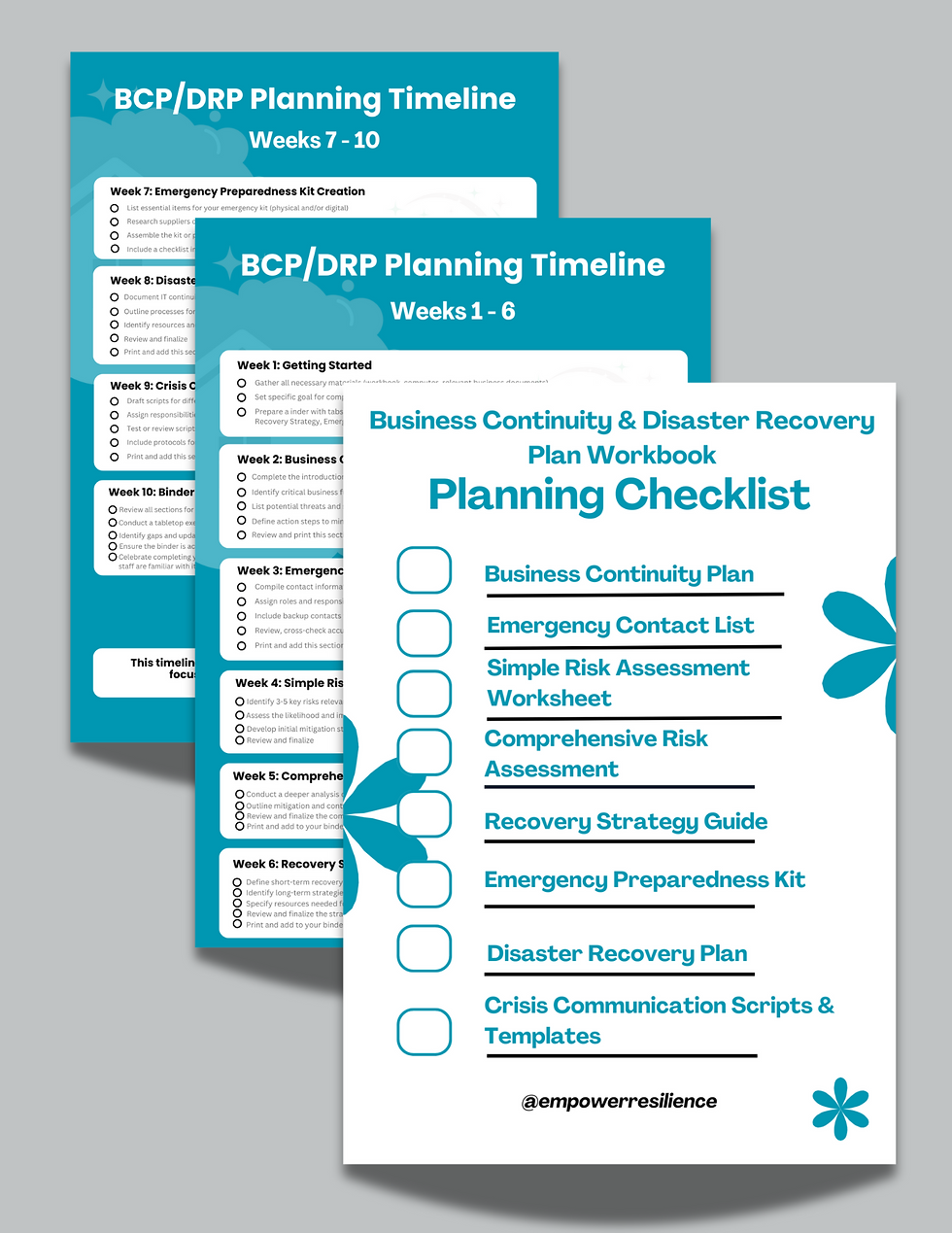
At Empower Resilience, we provide practical tools, resources, and inspiration to help you prepare for the unexpected. From step-by-step business continuity workbooks and digital templates, to resilience journals, apparel, and gear - our goal is to make preparedness simple, accessible, and effective. Explore our collections and discover how resilience can strengthen your future.




Comments