


Frequently Asked Questions (FAQ): Business Continuity and Disaster Preparedness
Updated: Jun 11, 2025

Q: What should a business continuity plan include?
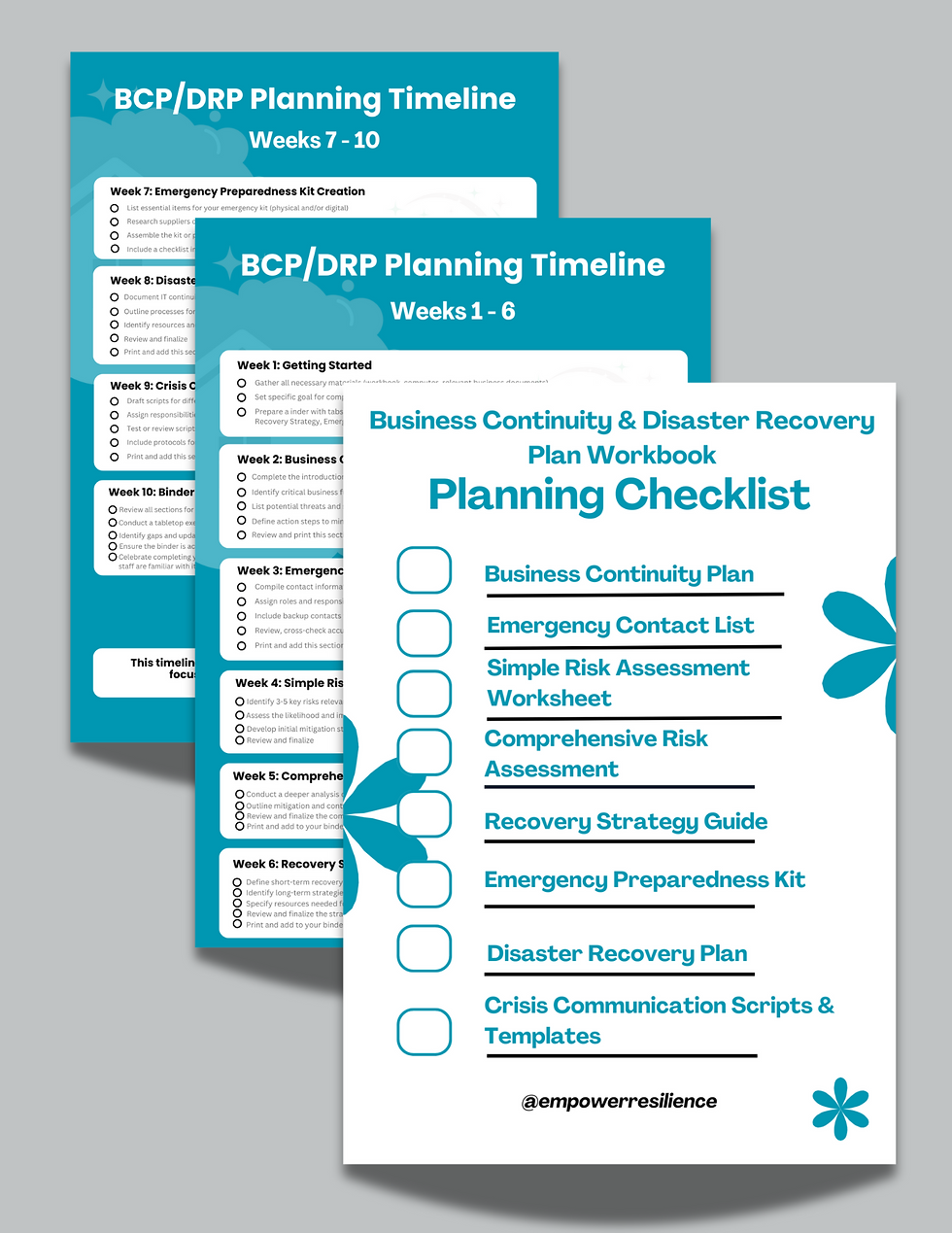
A: A good business continuity plan covers essential operations, key contacts, emergency procedures, and recovery strategies. You’ll want to identify critical business functions and detail how they will be maintained in different scenarios.
Q: How can small businesses prepare for long-lasting disruptions?
A: Start with an emergency cash reserve, update insurance coverage, and build relationships with backup suppliers. Planning for long-term disruptions, like a major natural disaster or extended supply chain issue, requires flexibility and clear communication channels with employees and customers.
Q: Do I need different emergency plans for different types of disasters?
A: Not necessarily. The all-hazards approach is a strategy that covers a wide range of risks, from natural disasters to cybersecurity threats, by focusing on flexible, scalable solutions. Empower Resilience provides templates that support this approach, helping businesses create plans that work for many scenarios.
Q: How often should I update my emergency plan?
A: Annual review at least, best practice is on a monthly to quarterly basis as minor business changes like operation procedures or new technology/software may change at different times throughout the year. Major business changes, like new locations or additional staff, mean it’s time to revisit and potentially revise your plan. After any major event, conduct a review to see if any adjustments are necessary.
Q: How does cybersecurity affect business continuity?
A: Cybersecurity threats can disrupt operations by compromising sensitive data or systems. Regular IT audits, employee training, and cybersecurity insurance can protect your business from long-lasting issues.
Investing in these strategies, plus the right tools from Empower Resilience, will help your business remain secure and resilient in the face of challenges. Preparing today means peace of mind tomorrow—and a stronger, more resilient business every day.




Comments