


Storm-Proof Your Shop: How to Prepare and Protect Your Brick-and-Mortar Business from Natural Disasters
Updated: Jul 13, 2025
Business Resilience | Protect Business from Disasters
Imagine this: You’re opening up for the day when the news breaks—a flash flood warning has been issued for your area. Within hours, heavy rain overwhelms the drainage system, and water begins creeping into your storefront. Inventory is damaged, the register short-circuits, and now you’re left scrambling to clean up—without a plan or a clue where to start.
If that scenario made your stomach drop, you're not alone.
Natural disasters like floods, storms, wildfires, and earthquakes don’t wait for businesses to be ready - but you can be.

Why Disaster Planning Is Critical for Storefront Businesses
Brick-and-mortar stores are especially vulnerable during disasters. Damage to your building, merchandise, or equipment can halt operations indefinitely. Worse yet, without a solid continuity and recovery plan, many small businesses never fully reopen after a major disaster (FEMA, 2023).
That’s why the Business Continuity & Disaster Recovery Plan Workbook exists—to help you take proactive steps before disaster strikes.
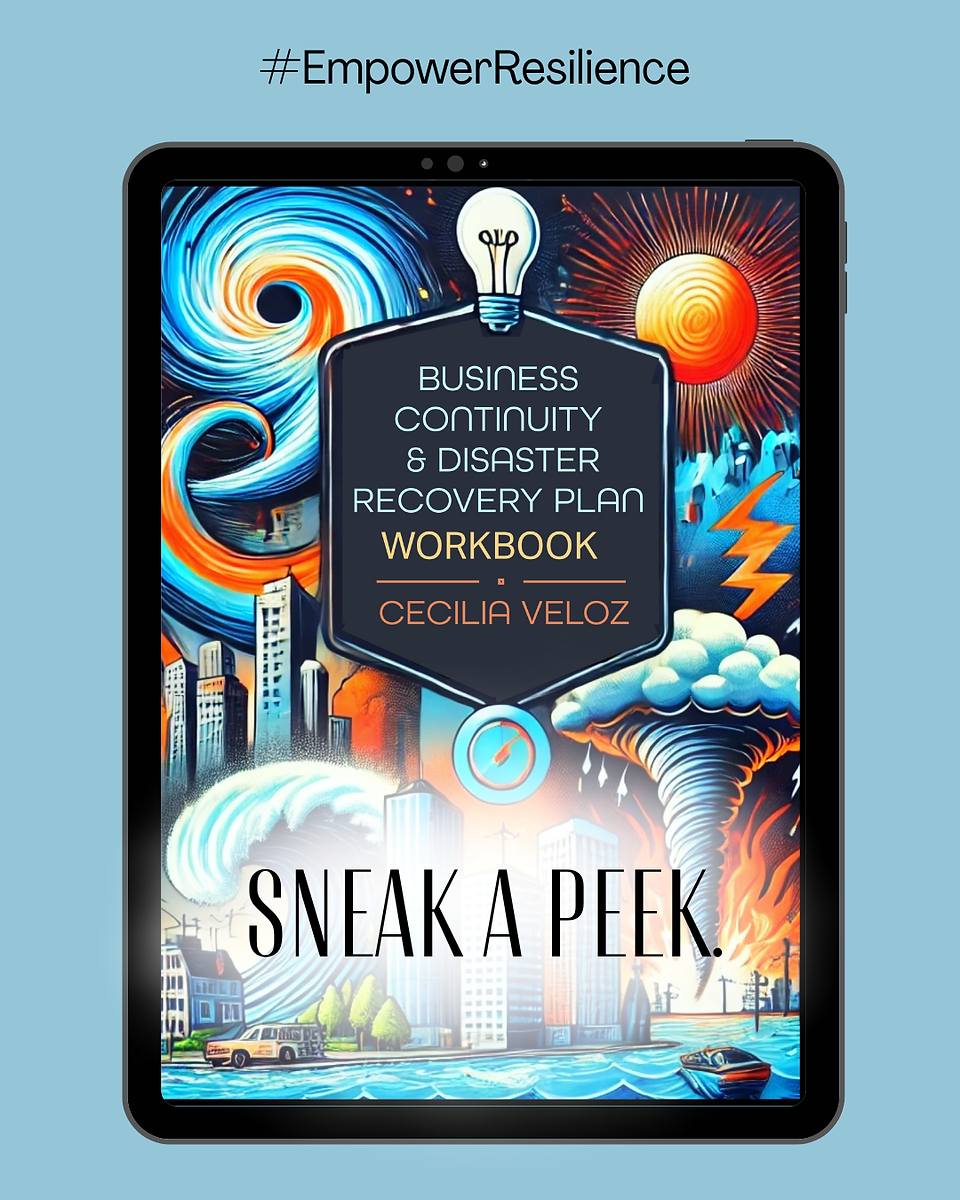
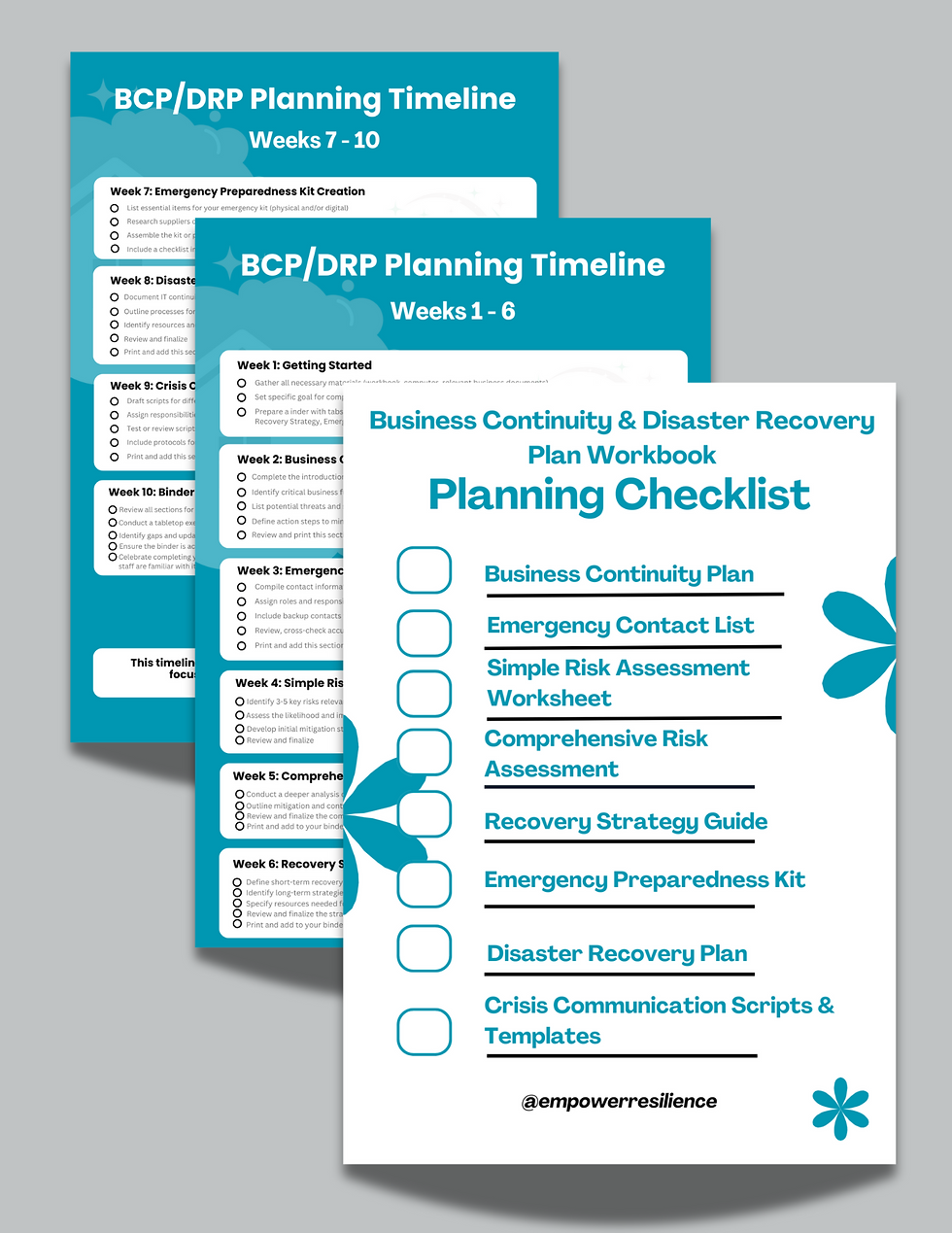
Business Continuity and Disaster Recovery Plan Workbook 
Business Continuity and Disaster Recovery Plan Workbook: Business Continuity Plan 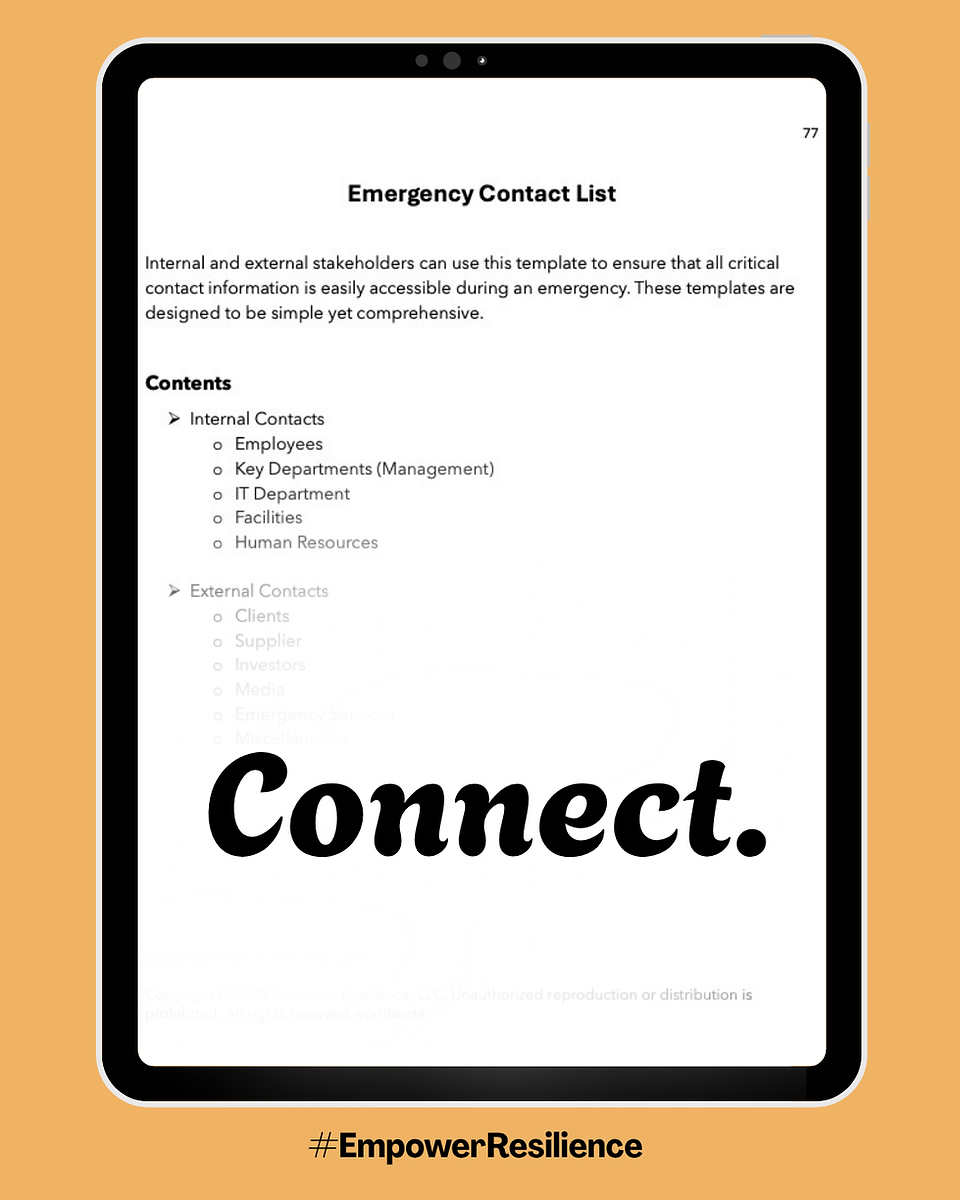
Business Continuity and Disaster Recovery Plan Workbook: Emergency Contact List 
Business Continuity and Disaster Recovery Plan Workbook: Simple Risk Assessment 
Business Continuity and Disaster Recovery Plan Workbook: Comprehensive Risk Assessment 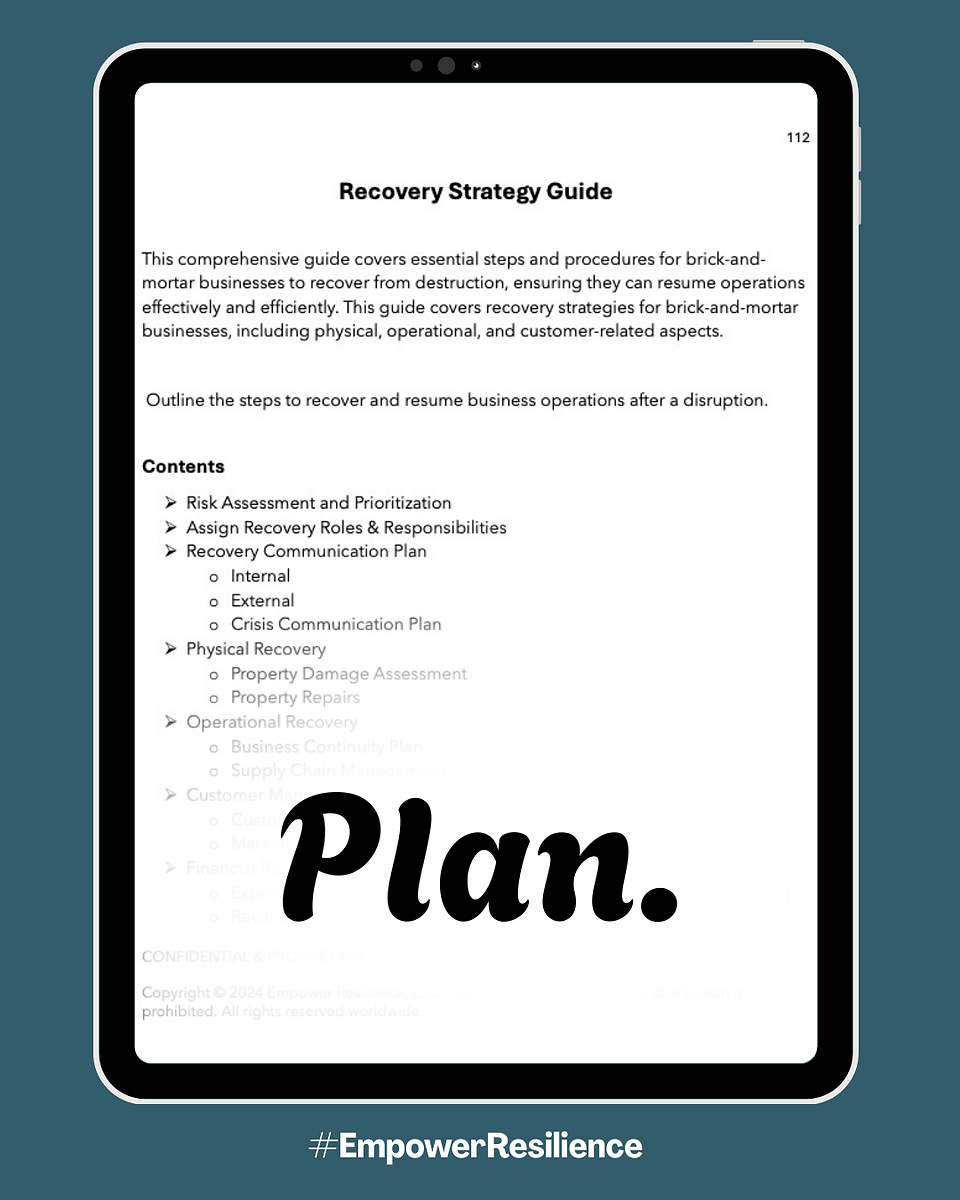
Business Continuity and Disaster Recovery Plan Workbook: Recovery Strategy Guide 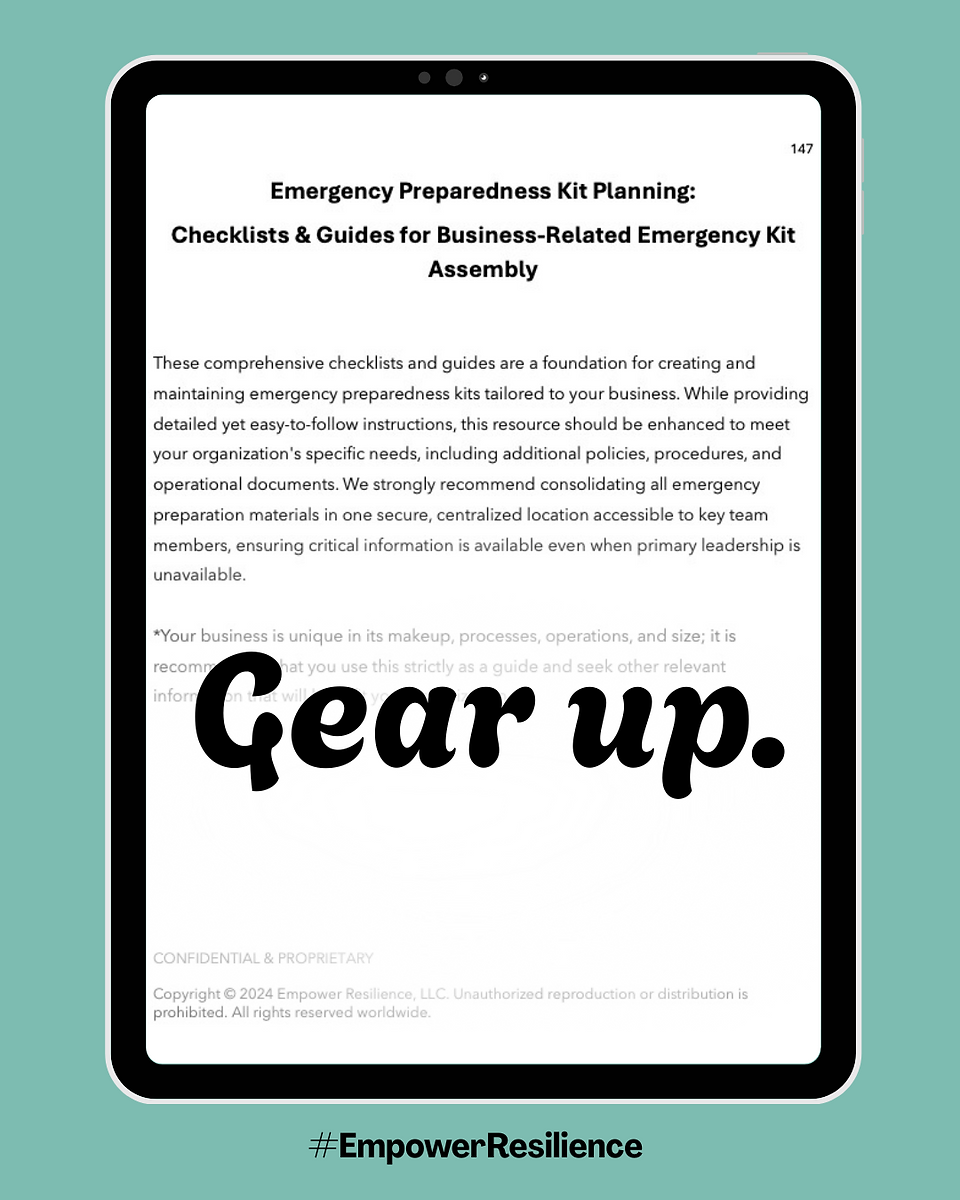
Business Continuity and Disaster Recovery Plan Workbook: Emergency Preparedness Kits 
Business Continuity and Disaster Recovery Plan Workbook: Disaster Recovery Plan 
Business Continuity and Disaster Recovery Plan Workbook: Crisis Communication Scripts and Templates
How the Workbook Helps Store Owners Like You
This workbook is your customizable blueprint to safeguard your business. It walks you through the exact steps needed to:
Assess Risks Specific to Your Storefront: Identify likely threats in your region (flood zones, fault lines, etc.) and how they impact your physical location.
Develop a Property Protection Strategy: Includes printable checklists for securing windows, backing up systems, protecting inventory, and preparing signage and structures for high winds or tremors.
Establish Emergency Contacts and Insurance Protocols: Organize vital information—like policy numbers, photos of inventory, and vendor contacts—so you’re not scrambling under stress.
Train Your Team: Ensure your employees know evacuation procedures, customer safety plans, and reopening protocols.
Recover with Confidence: Post-disaster checklists help guide your damage assessments, insurance claim steps, and recovery timelines so you can bounce back stronger.
Real-World Guidance Backed by Experts
The workbook is built on FEMA’s Small Business Preparedness tools, SBA recovery resources, and expert guidance from the Insurance Information Institute. Here are a few key recommendations we’ve included:
Elevate valuable inventory and electrical equipment off the floor to prevent flood damage (FEMA, 2023).
Take a full inventory with timestamped photos to speed up insurance claims after a disaster (Insurance Information Institute, 2022).
Store critical business documents off-site or digitally with secure backups (Ready.gov, 2023).
Your Next Step: Don’t Wait
You can’t control the weather, but you can control your readiness. If you own or manage a physical storefront, this workbook will walk you through every essential planning step.
Grab your copy of the Business Continuity & Disaster Recovery Plan Workbook and download the included checklists for immediate use.
Let’s make sure that the next time a storm rolls in, your doors don’t stay shut.
References
Federal Emergency Management Agency. (2023). Ready Business: Disaster planning toolkit. https://www.ready.gov/business
Insurance Institute for Business & Home Safety. (2022). Protect your business from natural disasters. https://ibhs.org
Insurance Information Institute. (2022). Business insurance and disaster preparedness. https://www.iii.org
Ready.gov. (2023). Protecting critical documents and records. https://www.ready.gov/business




Comments